Garbage Disposal Not Working? Troubleshooting & Repair Tips
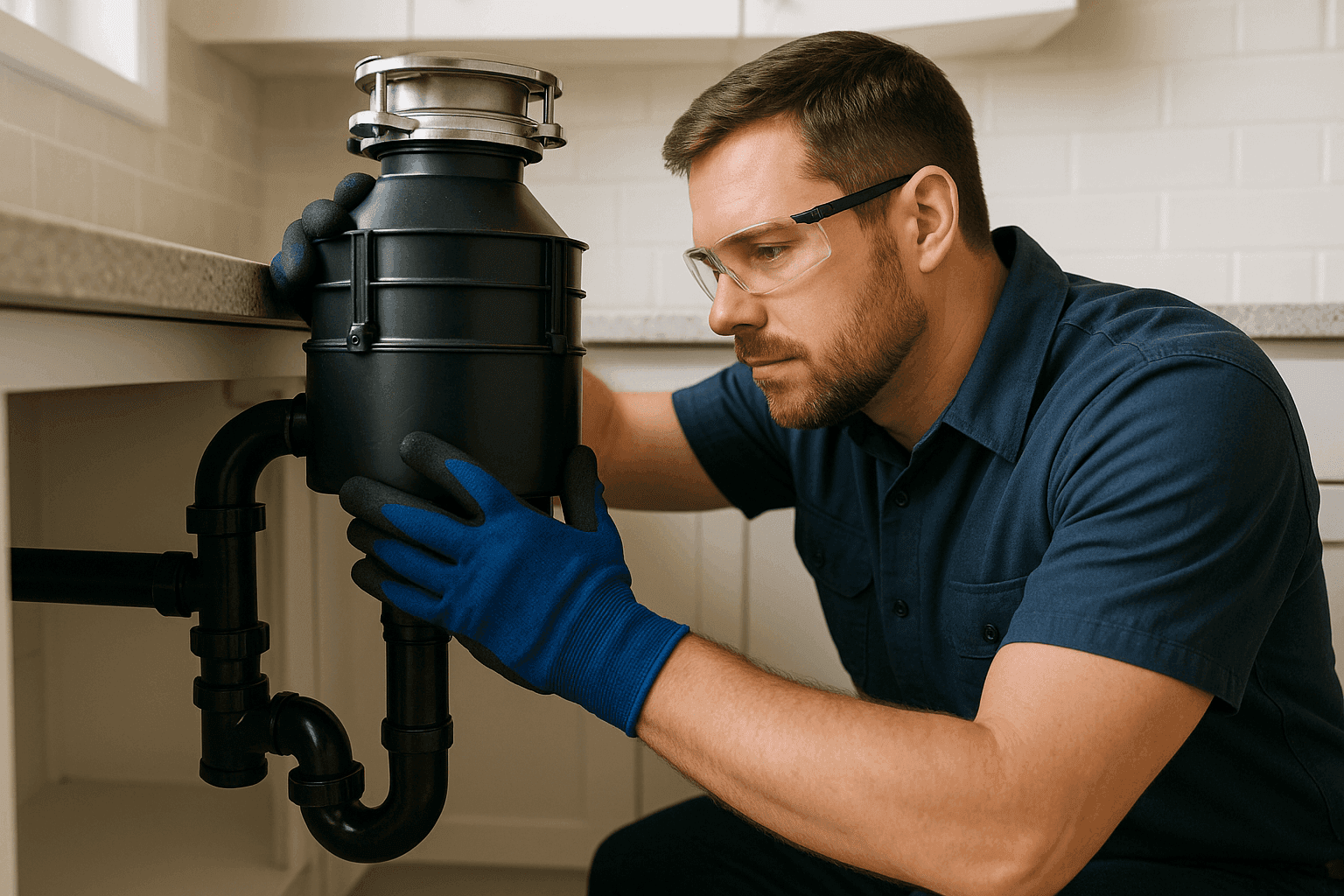
Is your garbage disposal making a strange noise, refusing to start, or just humming in protest? You’re not alone. Kitchen plumbing can throw curveballs at any hour, turning a normal night into a scramble. At Alvin’s Plumbing, we know how disruptive—even stressful—this can be. Luckily, some problems are easier (and safer) to handle than you might expect.
Let’s roll up our sleeves and get your sink back to business—safely and smartly.
How Garbage Disposals Work 🌀
Think of your garbage disposal as a tough, spinning blender under your sink. It chews up food scraps with metal impellers, then flushes them away with water. When everything hums along, it’s a kitchen hero. But when something goes wrong, the whole process can grind to a halt—literally.
- Main parts: Motor, grinding chamber, reset button, splash guard, drain pipe.
- What it does: Grinds food waste and sends it down the drain.
- What it doesn’t: Replace your trash can—avoid bones, grease, or fibrous veggies.
Understanding these basics helps you spot trouble fast and avoid bigger headaches down the road.
Common Disposal Problems
Garbage disposals are sturdy, but they have limits. Here’s what most homeowners run into:
- Nothing happens: You flip the switch and—crickets. No sound, no movement.
- It hums, but doesn’t spin: Motor tries, but blades are stuck.
- Loud grinding or rattling: Something’s jammed inside.
- Leaking: Water pooling under the sink.
- Bad smells: Built-up gunk or trapped waste.
Many issues start small—a stuck spoon, too many potato peels, or running the unit dry. Left unchecked, small problems can lead to emergency plumbing calls.
Safe DIY Fixes
Before you reach for tools, remember: your garbage disposal isn’t a toy. Treat it with respect. Safety comes first.
Quick Safety Checklist
- Power off: Always turn off the disposal at the wall switch AND unplug under the sink before touching anything.
- Never use hands inside: Use tongs or pliers if you need to remove debris.
- Have a flashlight: Visibility matters.
- Dry environment: Avoid standing in water—electricity and water don’t mix.
- Know your limits: If you feel unsure, stop.
Try These Steps
- Press the reset button.
- Look for a small red or black button on the bottom of your unit. If it’s popped out, press it in. This fixes many “dead” disposals.
- Check for jams.
- Insert a hex (Allen) wrench into the slot underneath the disposal. Gently turn back and forth to free the blades.
- No wrench? Use a wooden spoon handle in the sink drain (never your hand).
- Clear out blockages.
- Use pliers or tongs to remove stuck objects after ensuring power is off.
- Test the outlet.
- Plug in another small device (like a lamp) to check if the outlet is working.
- Listen for trouble.
- Humming? That means the motor’s trying, but something’s stuck.
- Silence? Could be a tripped breaker or faulty switch.
If the disposal still refuses to work, or if you smell burning, it’s time to call Alvin’s Plumbing.
When to Call a Professional
Some problems need more than elbow grease. Don’t risk injury or further damage.
Call for help if:
- Reset and jam-clearing didn’t work.
- You hear grinding metal or smell burning.
- Water is leaking from the bottom or side of the unit.
- The circuit breaker keeps tripping.
- You suspect electrical issues or frayed wires.
Licensed plumbers, like those at Alvin’s Plumbing, can safely diagnose and fix complex issues. We handle everything from leak detection to safe disposal replacement and even Sewer Line Repair near you if something bigger is brewing.
Preventing Future Jams 🛡️
Taking care of your disposal keeps it running longer—and keeps your kitchen stress-free.
Do:
- Run cold water during and after use.
- Feed small amounts of waste at a time.
- Occasionally grind ice cubes to clean blades.
Don’t:
- Pour grease, fats, or oils down the drain.
- Send bones, coffee grounds, fibrous veggies (celery, corn husks), or pasta into the disposal.
- Use harsh chemicals—they can eat away at seals and pipes.
Remember, a little caution goes a long way.
What Not to Put in a Disposal
Your garbage disposal isn’t a bottomless pit. Treat it kindly and it’ll return the favor.
Avoid:
- Eggshells (the membrane can gum up the works)
- Fruit pits and seeds
- Stringy vegetables (celery, asparagus)
- Large quantities of starchy foods (rice, potatoes)
- Non-food items (twist ties, sponges, glass)
Check out information from the U.S. Consumer Product Safety Commission for more on kitchen appliance safety.
What Pros Do On Arrival
When Alvin’s Plumbing gets the call, we come prepared.
Here’s what to expect:
- Safety check: We verify power and water shutoffs.
- Visual inspection: Checking for visible clogs, leaks, or broken parts.
- Electrical test: Ensuring the unit and wiring are safe.
- Manual clearing: Using specialty tools to remove jams.
- Repair or replacement: If the motor is burnt out, we’ll recommend a new unit.
- System check: We inspect nearby pipes for hidden leaks or blockages.
Our team always follows local plumbing codes and safety protocols, so you know the job’s done right.
Costs & Time Factors
Every garbage disposal repair is different. Some fixes take minutes. Others require replacement.
Factors that affect cost and timing:
- Age and make of your disposal
- Severity of the jam or damage
- Need for electrical repair or plumbing work
- Parts availability
Most minor jams or resets can be handled quickly. Full replacement or complex repairs may take an hour or more, especially if electrical or drain lines are involved.
When It’s an Emergency
Sometimes, a garbage disposal problem isn’t just an inconvenience—it’s a crisis.
Call emergency plumbing help if:
- There’s flooding under your sink.
- You smell gas (leave the area and call emergency services first).
- Water is backing up into other fixtures (like your dishwasher or tub).
- Electrical sparks, smoke, or burning smells are present.
In these situations, it’s safer (and faster) to let Alvin’s Plumbing take over.
FAQ
Why did my disposal suddenly stop working?
Usually, it’s a tripped reset button or a jammed impeller. Power surges or overloading can also cause shutdowns.
Is it safe to use chemical cleaners?
No. Most chemical drain cleaners can damage your disposal and pipes. Use only cleaners recommended by the manufacturer.
How long does a garbage disposal last?
With proper care, many units last 8–15 years. Heavy use, lack of maintenance, or putting the wrong items down the drain can shorten that lifespan.
Can I install a new disposal myself?
Some homeowners do, but it involves plumbing and electrical work. If you’re not confident, it’s best to call a licensed technician.
Local & Seasonal Considerations 🌦️
In colder months, pipes can contract, making jams more likely. During holiday seasons, be extra careful—big family meals mean more waste and more strain on your disposal. Avoid overloading your system, especially if you’re hosting guests.
If you live in an area with hard water, mineral buildup can also impact disposal performance. Alvin’s Plumbing can advise on water filtration systems to protect both your disposal and your pipes.
Don’t let a stubborn garbage disposal grind your day to a halt. Whether it’s a simple fix or emergency plumbing, Alvin’s Plumbing is here to help—anytime, day or night.
Call Alvin's Plumbing now — or reach us anytime at 888-565-9676 .